Marla and Kanal to Square Feet: A Practical Guide
10 November 2026
Marla and kanal are the units most people use when they buy, sell or build on a residential plot in Punjab and Islamabad. They sound simple, yet the same “5 marla” plot can mean different areas depending on where it is and which records it comes from. This guide explains how the units work, why the numbers differ, and how to check the real size of your own plot before you plan a house on it.
Marla and kanal explained
The relationship between the units is fixed: 1 kanal = 20 marla. What changes is the size of a single marla in square feet. In everyday use you will come across two main standards:
- 225 square feet per marla (25 square yards). This is the size used by most modern housing societies and development authorities, so 1 kanal = 4,500 sq ft.
- 272.25 square feet per marla (30.25 square yards). This is the older revenue standard, still found in many land records, rural deeds and some older areas, so 1 kanal = 5,445 sq ft.
A third value, around 250 sq ft per marla, also appears in some schemes and older municipal records, which is one more reason to check your own documents rather than rely on a general rule.
Quick conversion table
| Plot size | At 225 sq ft per marla | At 272.25 sq ft per marla |
|---|---|---|
| 1 marla | 225 sq ft (25 sq yd) | 272.25 sq ft (30.25 sq yd) |
| 3 marla | 675 sq ft | 816.75 sq ft |
| 5 marla | 1,125 sq ft | 1,361.25 sq ft |
| 7 marla | 1,575 sq ft | 1,905.75 sq ft |
| 10 marla | 2,250 sq ft | 2,722.5 sq ft |
| 1 kanal (20 marla) | 4,500 sq ft | 5,445 sq ft |
| 2 kanal | 9,000 sq ft | 10,890 sq ft |
To convert square feet to square yards, divide by 9. To convert square feet to square metres, multiply by 0.0929.
Why conversions differ
Pakistan does not use one single marla across every city and housing scheme. Historic land records were kept on the larger revenue marla, while planned societies and authorities laid out plots on a smaller, rounder figure that makes plot dimensions easy to work with. A 25 × 45 ft plot, for example, is exactly 1,125 sq ft, which is 5 marla at 225 sq ft.
The difference is not small. On a 10 marla transaction the gap between the two standards is more than 470 sq ft, roughly the size of an extra room on each floor. If land is priced per marla, it matters which marla the seller and the buyer have in mind.
A common example in the twin cities is the 30 × 60 ft plot. It covers 1,800 sq ft, which is 8 marla at 225 sq ft but only about 6.6 marla at 272.25 sq ft. Both descriptions can be heard in the market for the same piece of land.
Plot size versus covered area
Plot size is the land you own. Covered area is the floor area you are allowed to build on it, added up across all floors. The two are very different numbers, and construction is almost always priced on covered area.
- Setbacks: most authorities require open space at the front, and sometimes at the sides and rear, so the house footprint is smaller than the plot.
- Ground coverage limits: by-laws often cap the percentage of the plot that the ground floor may cover.
- Number of storeys: a double-storey house roughly doubles the covered area of the footprint, plus any stair tower (mumty) on the roof.
So a 5 marla plot of 1,125 sq ft might carry a double-storey house of roughly 1,800 to 2,200 sq ft of covered area, depending on the rules of the society and the design. Ask your architect for the covered area of each floor before you compare construction quotes.
Checking your own plot
Before you finalise a design or a price, confirm the actual size rather than the label:
- Read the property documents. The allotment letter, transfer letter, registry or fard should state the area, and often the plot dimensions in feet.
- Look for the dimensions, not just the marla. Length × width in feet gives you the area in square feet with no conversion confusion.
- Check the authority standard. Your housing society, CDA, RDA or the relevant development authority can confirm which marla size its plans use, along with the setbacks and coverage rules that apply.
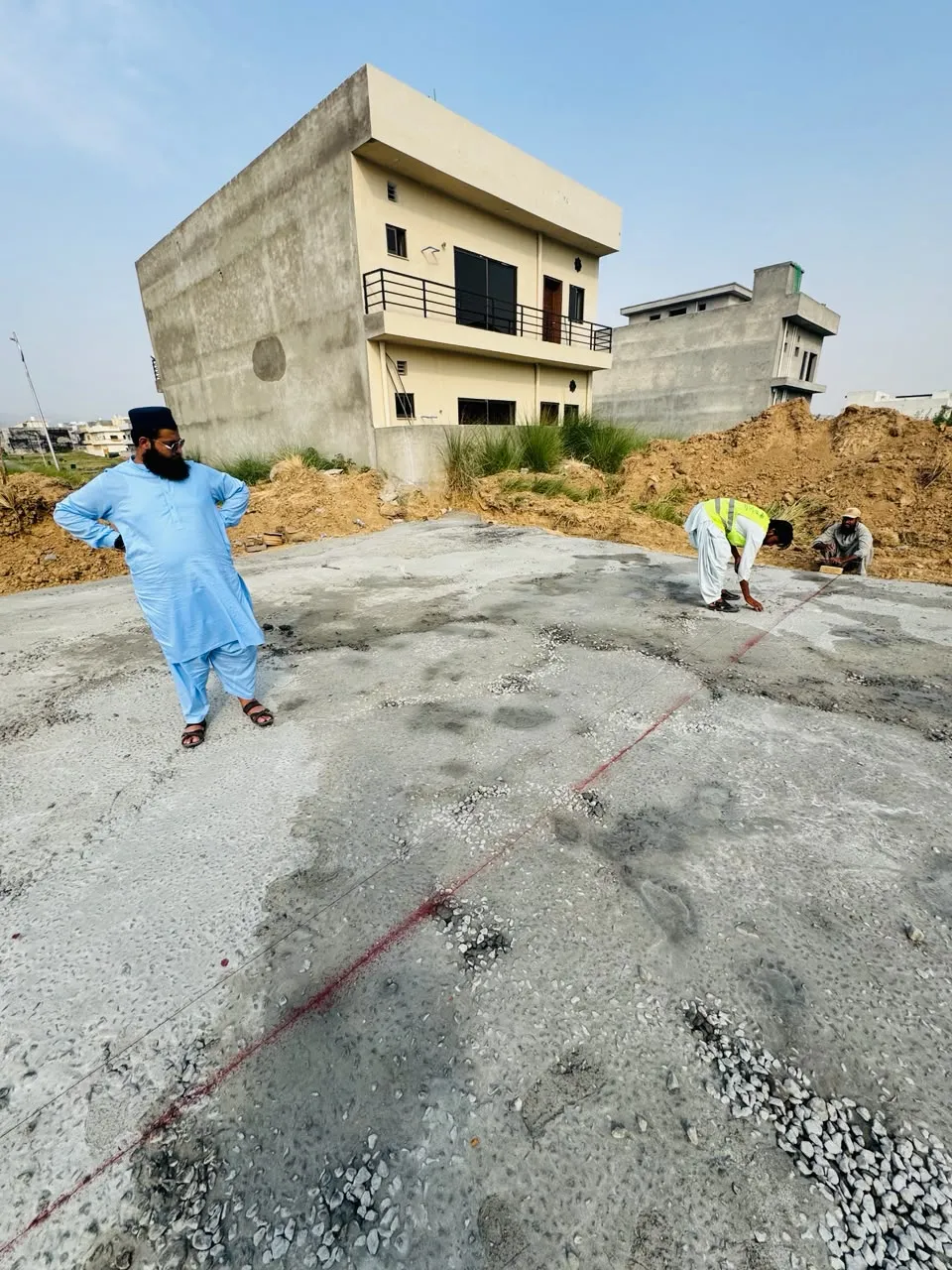
- Get the plot demarcated. Before construction starts, have the plot measured and marked on site so that the house is set out on the correct boundaries.
Always confirm the final plot dimensions in your own property documents and with the relevant authority. The figures in this guide explain the common standards; they do not replace your records.
Frequently asked questions
How many marla are in one kanal?
One kanal is always 20 marla. Its area in square feet depends on the marla standard: 4,500 sq ft at 225 sq ft per marla, or 5,445 sq ft at 272.25 sq ft per marla.
Is 5 marla 1,125 sq ft?
On the 225 sq ft standard used by most housing societies, yes. On the older 272.25 sq ft standard, 5 marla is about 1,361 sq ft.
Which standard is used in Islamabad and Rawalpindi?
Both appear. Planned sectors and housing societies commonly work on 225 sq ft per marla, while older land records may use the revenue marla. Check your documents and ask the relevant authority.
Planning a house on your plot? MUK Design & Construction can review your plot dimensions and by-laws and prepare a layout that makes full use of the space. See our architectural design service or send us your plot details.
Planning a project?
Talk to MUK about design, construction and finishing for your home or commercial space.